
Search Ashland County Probate Court Records
Ashland County Probate Court Records are useful when you need to see how an estate, guardianship, or adoption case moved through the local court system. The county office keeps the files, and the docket tools help you see the trail before you ask for copies. If you are checking a will, tracking a personal representative, or trying to confirm whether an old matter is still open, the county probate office and the statewide case lookup both matter. This page gives you the local contacts, the state forms, and the public access tools that fit Ashland County work.
Ashland County Probate Overview
Ashland County Probate Court Records Office
The Ashland County Register in Probate is also the Juvenile Court Clerk. The same office handles probates, guardianships, conservatorships, adoptions, termination of parental rights, emergency detentions, and juvenile matters. The research notes that probate files are kept in the register's office, and probate records are open records. That makes this office the core place to ask for a file, a copy, or a walk-through of the county's record trail.
The county circuit court page adds that the clerk of circuit court has public record duties, keeps the court record system current, and works within CCAP. That matters because the probate office and the court office are not the same thing, even when they work together. If you want a docket entry, a filing date, or a court-side record trail, the clerk's office and WCCA can help. If you want the actual paper file, the probate office is the right stop.
The county law library directory is a useful cross-check because it lists the probate office, the clerk of court, the county clerk, the register of deeds, and other county offices in one place. That is handy when a probate search leads to a deeds issue, a death record question, or a need to confirm a name or address. Ashland's office structure is simple once you see it. One office keeps the file, one keeps the docket, and the county directory helps you sort the two.
This Ashland County probate image comes from the local probate and juvenile court page at Ashland County Probate and Juvenile Court.
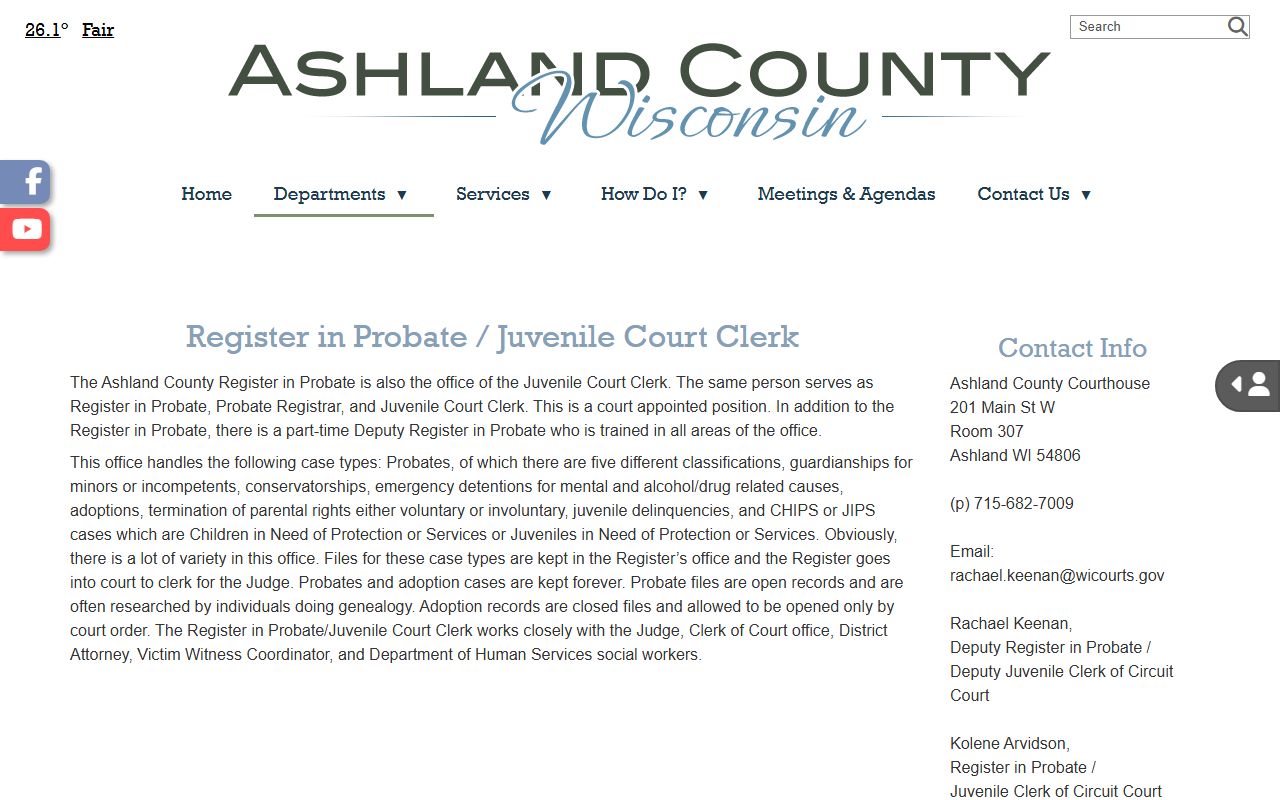
The office page is the clearest source for who does what in the county probate workflow.
This Ashland County probate image links to the circuit court page, which explains the court-side record duties and public access responsibilities.
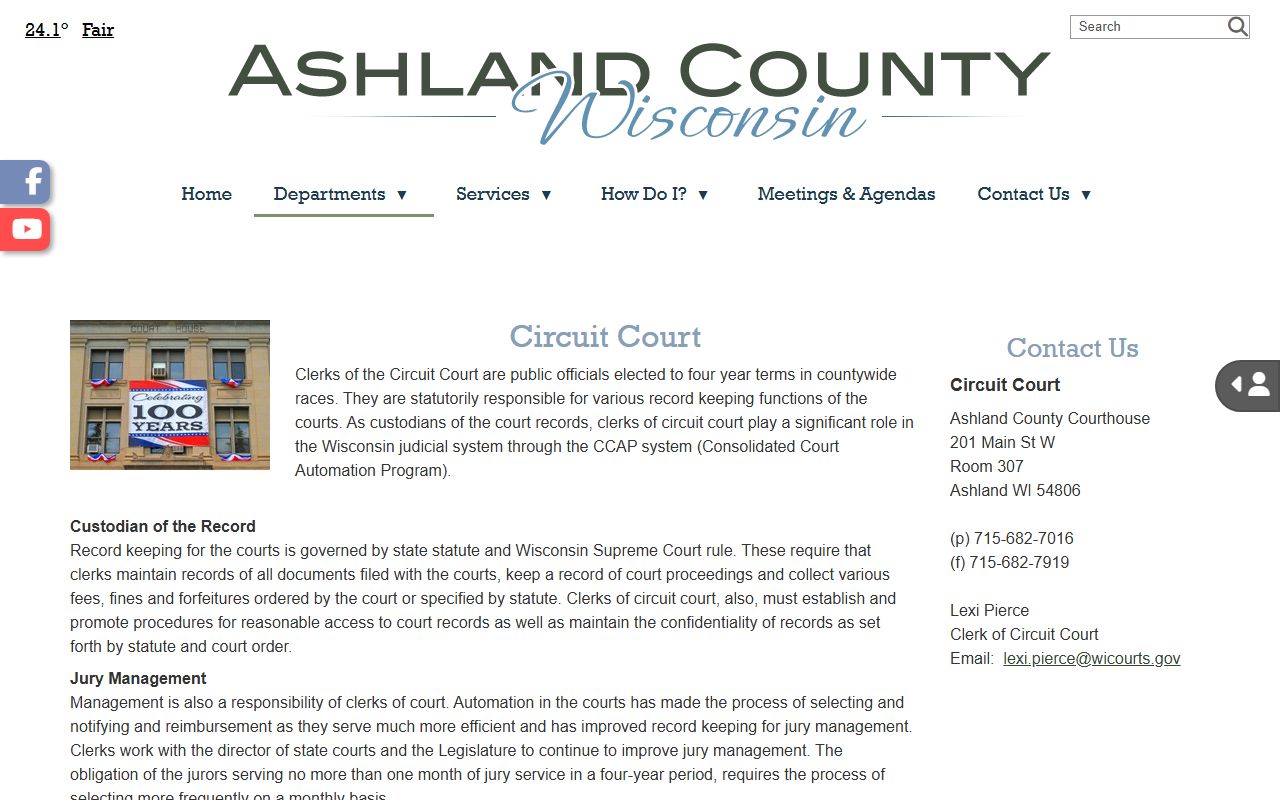
That page helps you tell the difference between the filing office and the docket office.
How to Search Ashland County Probate Court Records
Begin with WCCA if you want the case trail. The statewide portal gives docket information, not full text, but it is still the easiest way to see whether a probate file exists, what the case type looks like, and which filings were entered. It covers probate, wills, trusts, and other public circuit court matters. In a county like Ashland, that is a practical first move because it tells you whether you should ask for a file or keep digging in the docket first.
The state self-help probate page and the Wisconsin Court System forms page are the next two stops. They show the statewide probate forms that counties use for informal administration, formal administration, special administration, claims, inventories, and closing papers. Those sources are useful because local offices may not have a large web footprint, but the forms and rules are still statewide. The state law library probate topic page also points you to county offices and to WCCA when you need to move from a search to a request.
This Ashland County search image points to the Wisconsin State Law Library county directory, which gives a clear contact map for the county offices.
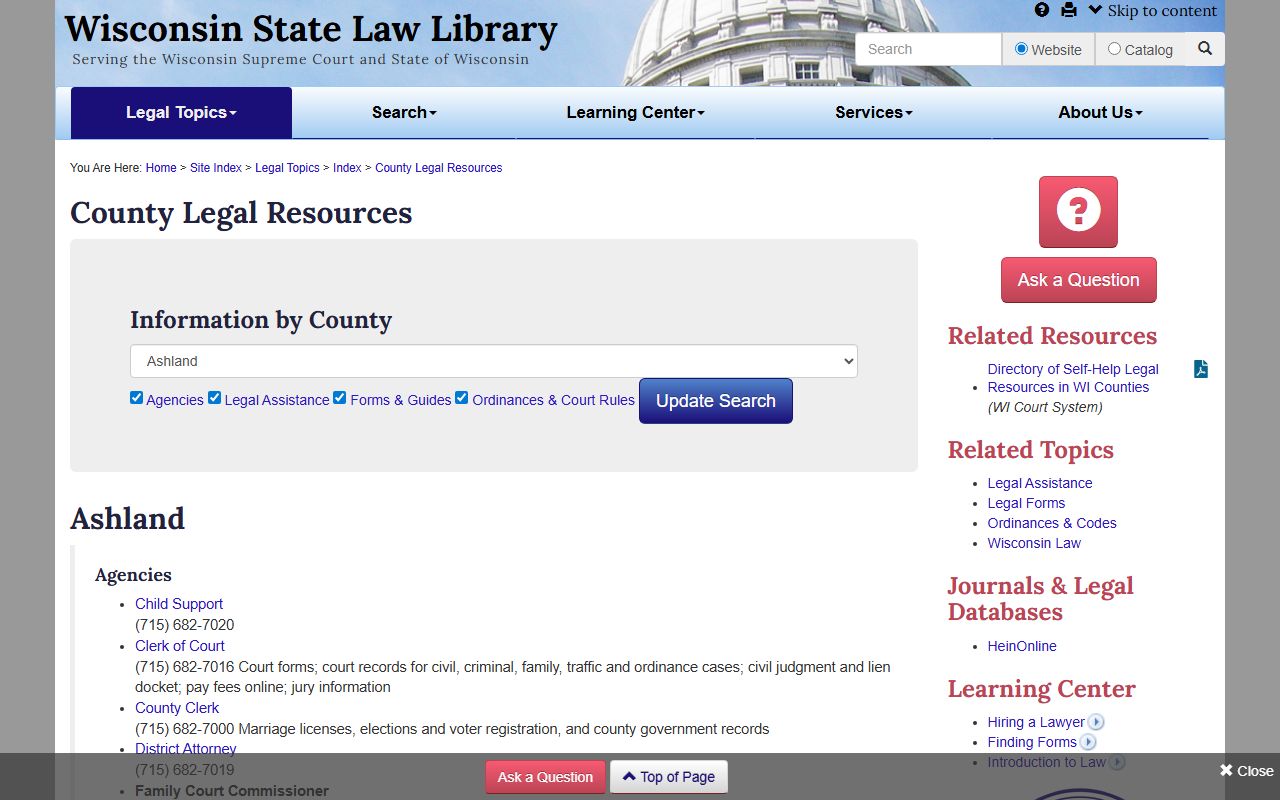
Use it when you need the office phone number, the records office role, or a fast reminder of which office handles what.
For a focused search, start with the decedent's name, then add the county, approximate death date, and case number if you know it. If the case is old, the online docket may be brief, but the paper file can still be open for inspection unless a court order makes it confidential. Adoption files are different. Those are closed and can be opened only by court order, which is why the office needs to know the record type before it pulls a file.
Note: WCCA helps you find the case, but the Ashland probate office is still the place to inspect the actual file.
Ashland County Probate Court Records and Files
Ashland's probate office handles a broad mix of case files, and that mix shapes what you may see in the record. Probate can include five different classifications, guardianships, conservatorships, and actions tied to adult or juvenile protection. The office keeps those files and works with the judge, clerk of court, district attorney, and human services staff. That means a probate search can turn into a bigger records hunt if the estate touches guardianship or another protected proceeding. Knowing the case type helps you ask for the right box of papers.
The county research says probate and adoption cases are kept forever. It also says probate files are open records, while adoption records are closed unless the court orders otherwise. That distinction matters. If you are researching a family estate, probate can often be reviewed in the ordinary public way. If you are researching an adoption, the path changes fast and may require a court order or a different program. The state adoption records search program is separate from probate, so do not mix those records together unless the case facts call for it.
Statewide probate law still guides the local file. Chapter 851 defines the basic terms and the duties of registers in probate. Chapter 852 covers intestate succession. Chapter 853 covers wills, including the rule that original wills are filed with the register in probate. Those statutes are not just legal background. They explain why a file may contain an original will, a statement of informal administration, an inventory, a claim, or a closing paper. The file often reads like a timeline of the estate itself.
For the county office contact side, the county law library page is still one of the cleanest references. It lists the probate office with its phone number and ties it to adoptions, civil commitments, estates, trust, guardianship, and probate. That makes it easier to tell where to call before you send a request or drive to the courthouse. Ashland County is a small office with a broad job list, so the contact directory is part of the record story.
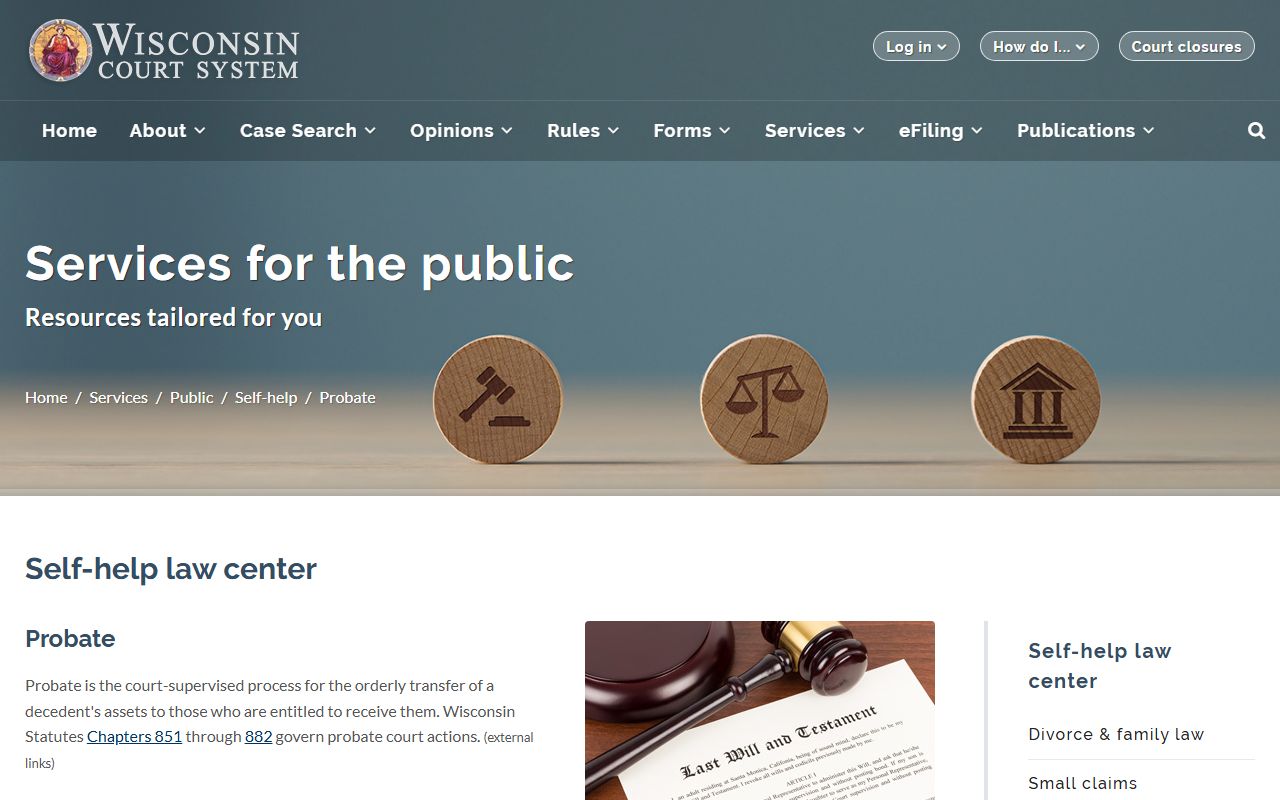
This Ashland County probate image points to the statewide probate topic page, which helps when the county directory gets you to the right office but you still need probate-specific guidance.
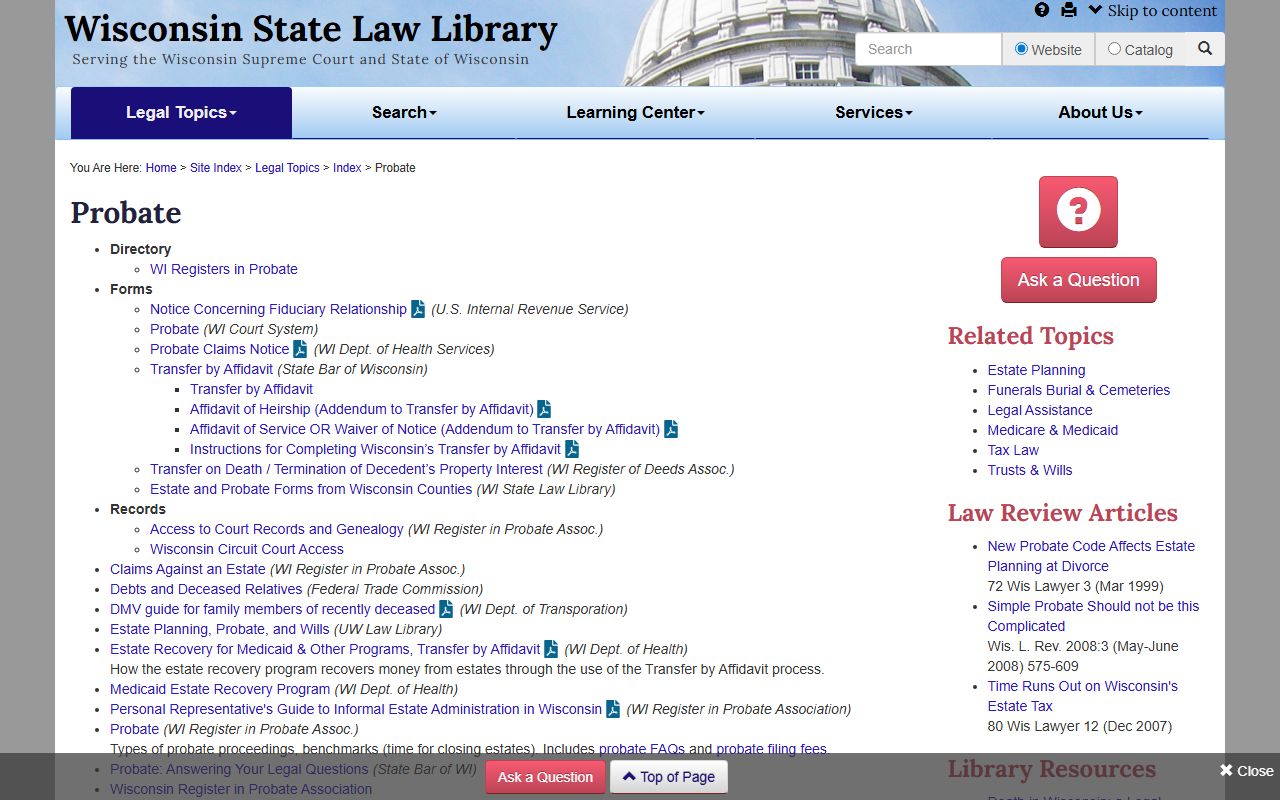
That is useful when you need to pivot from probate to deeds, vital records, or other county record sources.
Getting Ashland County Probate Court Records Copies
To get copies, start with the probate office and give them the decedent's name and the best date you have. The state probate topic page says the county office can use the alphabetical index and the file number to locate records. If you need certified copies, say so at the start. Certified letters are often what banks, title companies, and other third parties want. A docket entry alone is useful, but it is not the same as a certified paper copy from the case file.
Some probate questions can be answered by the office without much delay. Others need a careful file pull. If you are working with a long-closed estate or an estate that was handled before modern electronic access, older archive collections can be part of the search path. The state law library probate page points to those older record sources and also reminds researchers that some counties allow mail requests. A written request with the name, case number, and requested documents can save time.
The Wisconsin Court System forms page is also helpful when you are not sure what the office expects. The statewide forms apply to probate filings across the state, and the eFiling rules mean modern filings have to fit the court's format. The WRIPA probate materials add a practical point too. Probate estates are meant to move without needless delay, and the statewide benchmark is fourteen months. That is a benchmark, not a hard stop, but it helps you read the file in context when you see a slower case.
If you need to confirm where the office is or who works there, the WRIPA directory gives the current contact path for Ashland County probate. It is a good cross-check before a phone call or a mailed request. That matters in a county where the probate office, juvenile clerk, and court clerk all overlap in daily work.
This Ashland County probate copy image points to the Wisconsin probate self-help page, which is useful when the local office handles many case types and you need the statewide probate framework.
Use the office page when you are ready to ask for the file, not just the docket.