
Find Polk County Probate Court Records
Polk County Probate Court Records usually begin at the Justice Center in Balsam Lake, where the Register in Probate maintains the official court records for formal probate, wills kept for safekeeping, guardianships, protective placements, conservatorships, commitments, and adoptions. The county probate page also explains how property can move outside probate, which matters when you are trying to decide whether an estate should open a case at all. If you need the public docket, the record office, or the form path, start with the county page and the statewide case search tools so you can match the record type before you ask for copies.
Polk County Probate Overview
Polk County Probate Court Records Office
The Polk County Register in Probate office is at the Justice Center, 1005 W. Main St. Suite 500, Balsam Lake, and the office phone is 715-485-9238. Office hours are 8:30 to 4:25. The county page says the office maintains the official court records for formal probate, wills for safekeeping, guardianships, protective placements, conservatorships, commitments, and adoptions. That makes the office the first stop when you need Polk County Probate Court Records or a copy request routed to the correct case type. The office also cannot give legal advice, so it is important to separate record questions from legal strategy before you call or file.
The county probate page is especially useful because it explains what property is and is not subject to probate. It also explains transfer by affidavit under $50,000, formal administration, informal administration, summary settlement, summary assignment, and ancillary proceedings. Those are the terms that shape the file. If the estate can move by affidavit or another shortcut, the record may look very different from a fully opened formal probate. If it does not fit those shortcuts, the public file should still tell you which path the estate took.
This Polk County probate image comes from the county probate page at Polk County probate page.
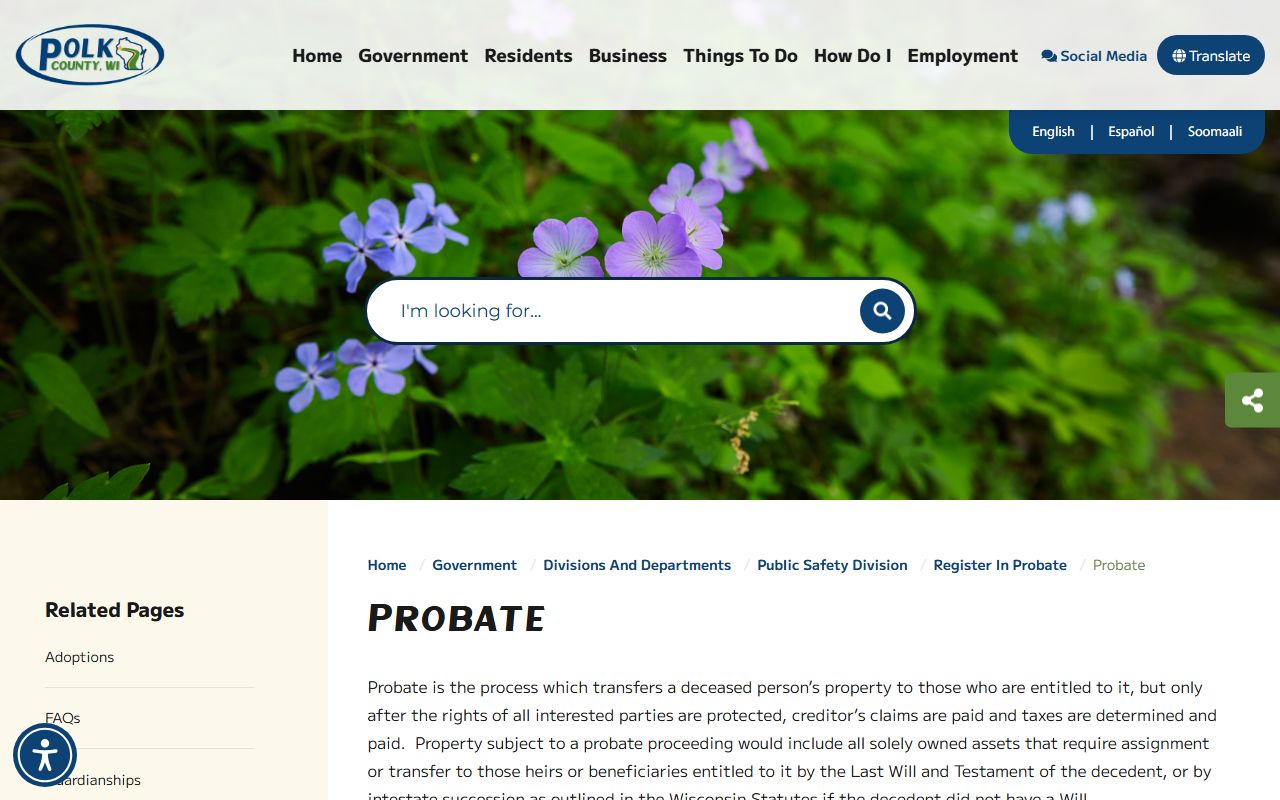
That page is the county's main explanation of the probate record types, the estate paths, and the office role.
This Polk County probate image comes from the county FAQ page at Polk County probate FAQs.
The FAQ page is where the county puts the practical filing timing and fee details in plain language.
Polk County Probate Court Records searches often go faster when you know whether you are dealing with probate, guardianship, or a related filing that never became a full estate. The county office and the state case search tools work best when you already know the name, the filing year, and whether you are asking for the docket, the will, or the case file itself.
How to Search Polk County Probate Court Records
Use the statewide docket tools first if you want the public case trail. WCCA and Wisconsin case search show the public docket history that lets you confirm the right Polk County Probate Court Records file before you contact the office. That matters because the county handles a mix of formal probate, informal administration, guardianships, and related records. The docket can tell you whether the file is open, closed, or tied to another case type that should be searched separately.
The county probate page and the Wisconsin State Law Library directory help you figure out whether the record should be with the Register in Probate, the clerk of court, or another county office. That is a practical distinction. A probate case might have a docket entry but still need a paper copy from the office. A will might be filed for safekeeping without a long estate trail. If you keep the request narrow, the office can usually find the right file faster.
This Polk County probate image comes from the Wisconsin State Law Library county directory at Polk County law library directory.
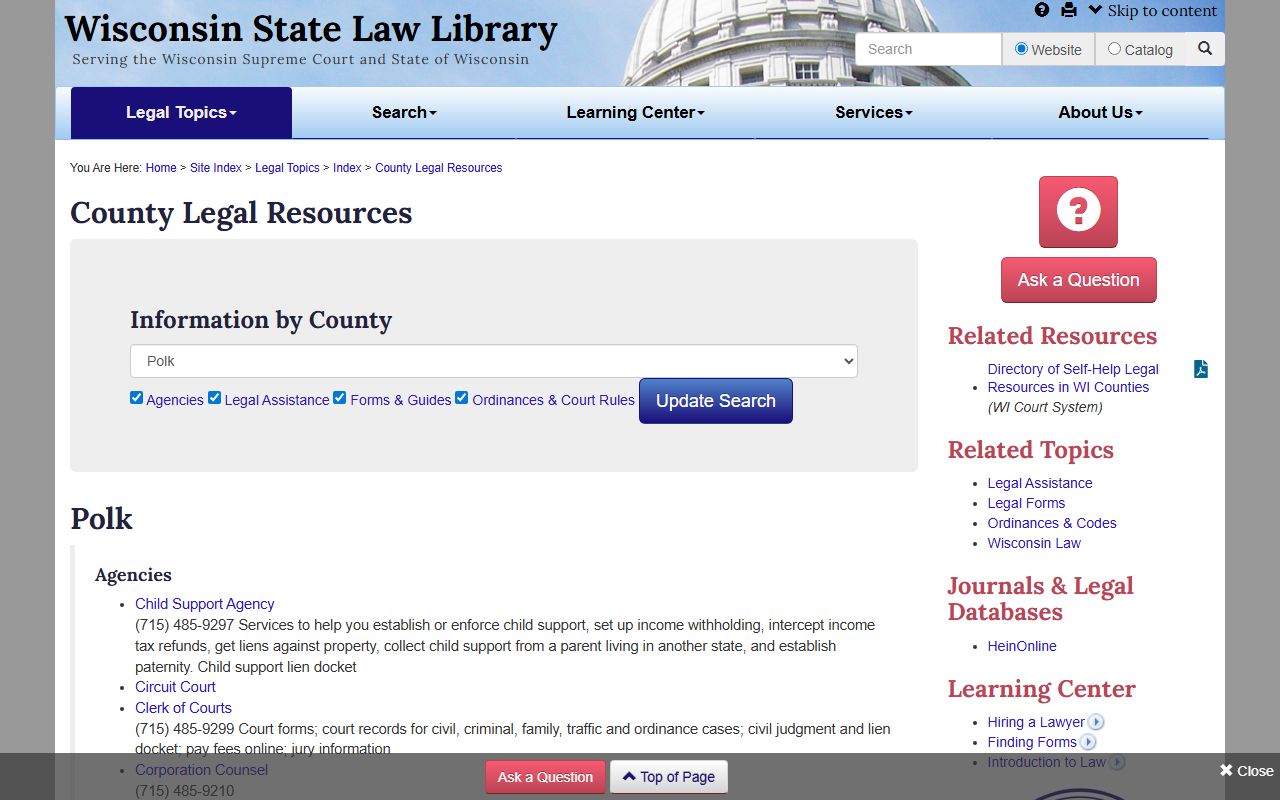
That directory is a clean cross-check when you want the county office names and the broader record-office layout in one place.
The county FAQ says the original will must be filed within 30 days of death, and the 10th district benchmark is 12 months. Those details help you judge timing when you are looking at a docket or asking whether a file should already have advanced to a later stage. If you are preparing a request, those timing clues are often as useful as the case number itself.
Polk County Probate Court Records Forms and Filing Rules
The Wisconsin circuit court forms page is the safest source for current probate forms, and Polk County's office expects the filing to match the current state form path. That matters because the county probate page breaks out the main estate routes in a way that affects the paperwork. You may need formal administration, informal administration, summary settlement, summary assignment, or an ancillary proceeding. The form you choose should match the way the estate was actually handled, not the way you hoped it would be handled.
The county page also explains what property is and is not subject to probate. That is a key point for the record search. If the property passed by affidavit under $50,000, the file may be shorter than a formal probate file. If the estate needed a full administration, the docket should show a more detailed probate trail. For Polk County Probate Court Records, that difference often explains why some searches produce a single document while others produce a full case packet.
This Polk County probate image comes from the county register in probate landing page at Polk County Register in Probate.
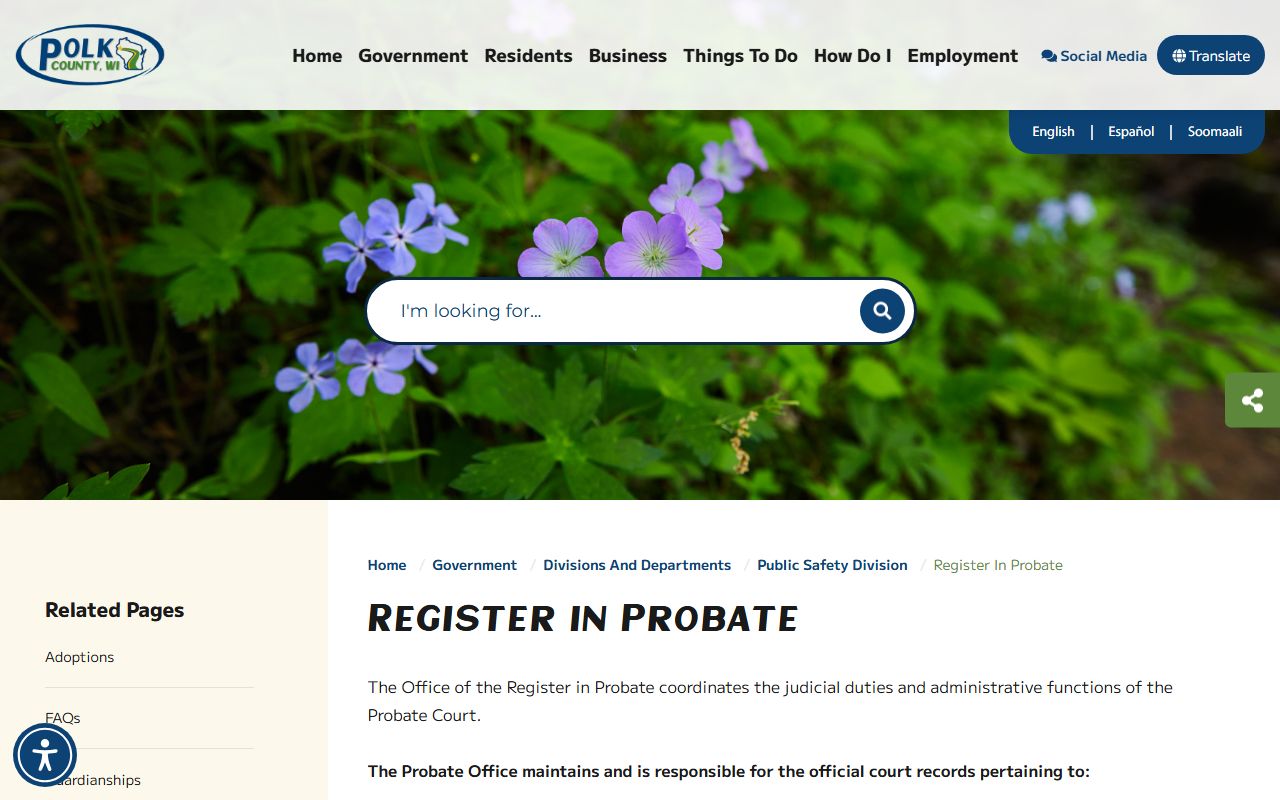
That page confirms the county office location and the official record role before you build a records request.
The FAQ page says a claim against estate filing fee is $3, which is helpful when you are checking whether a claim entry should exist in the file. It also says the original will must be filed within 30 days, so a missing will filing date can be a useful clue that the record is incomplete or that a separate office needs to be checked. These small filing rules often explain the shape of the file better than the docket summary alone.
Polk County Probate Court Records also intersect with eFiling now that probate and guardianship case types are available electronically. That means the newest files may have an electronic component even if older files were entirely paper based. When the matter is recent, check both the county office and the eFiling path so you do not miss a document that was never filed on paper.
Polk County Probate Court Records Access
Access starts with the office and the public docket. The Register in Probate keeps the official records, the county probate page explains the legal and procedural path, and WCCA shows the docket history that helps you confirm the case. That combination is the cleanest way to approach Polk County Probate Court Records when you are still deciding whether you need an estate file, a guardianship file, or a will search. If the file is older, the county office may still be the right place to ask for copies even when the docket is the best place to start.
The county office cannot give legal advice, which means records requests should stay focused on the document you want and the case you already identified. If you need eFiling, the probate and guardianship categories are available now, so recent cases may be easier to locate in the electronic system than in paper storage. When you combine that with the county's explanation of formal and informal administration, it becomes much easier to see why one file is short and another file is long.
This Polk County probate image comes from the eFiling page at Wisconsin circuit court eFiling.
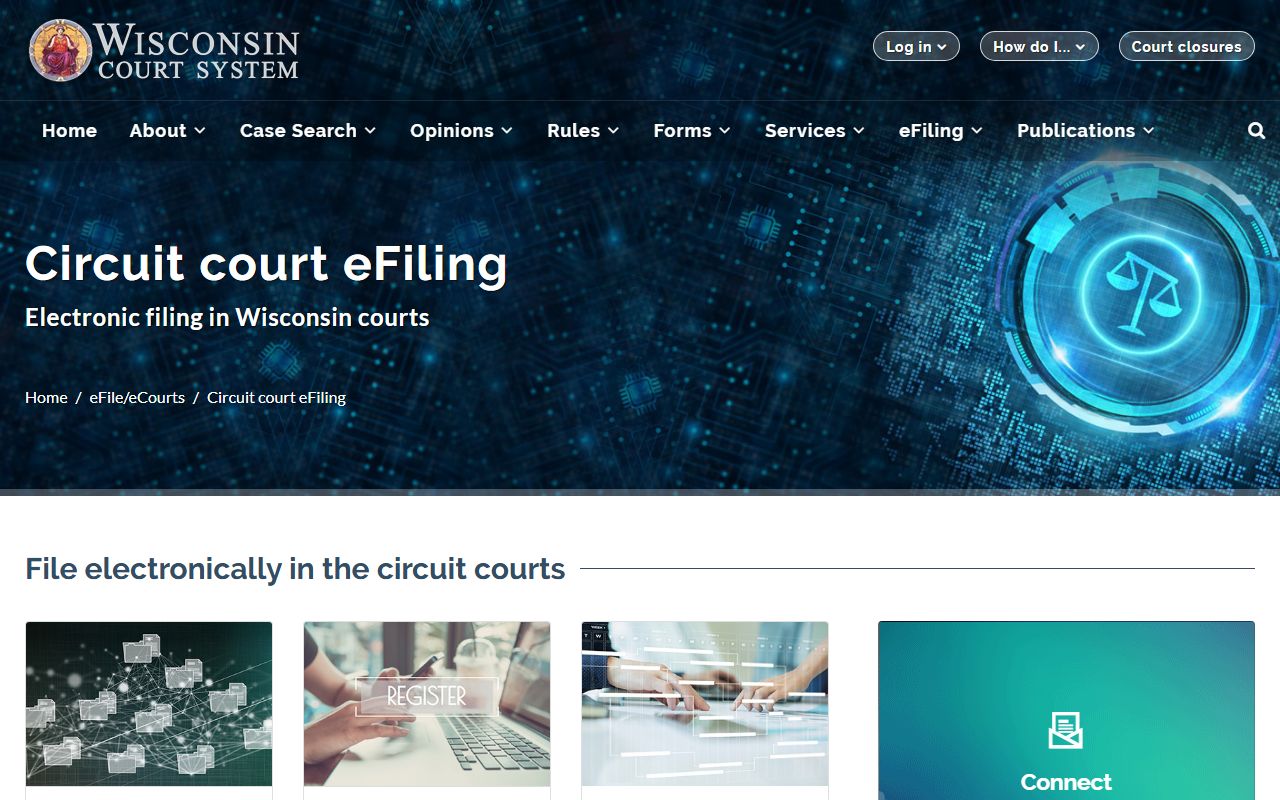
That source is useful when you need the current electronic filing route for probate or guardianship matters.
The county FAQ also gives you the 10th district benchmark of 12 months, the $3 claim fee, and the 30-day will filing rule. Those are the practical markers that help you judge whether a file is complete, still active, or missing a piece. If the matter involved ancillary proceedings or a transfer by affidavit, the record may be shorter, but the docket should still show the route that was taken.
For Polk County Probate Court Records, the cleanest request usually includes the name, the filing year, the office, and the case type. Once those are clear, the office can tell you whether the file is paper, electronic, or split between office records and a docket entry. That is the fastest way to move from a general search to the exact document you need.